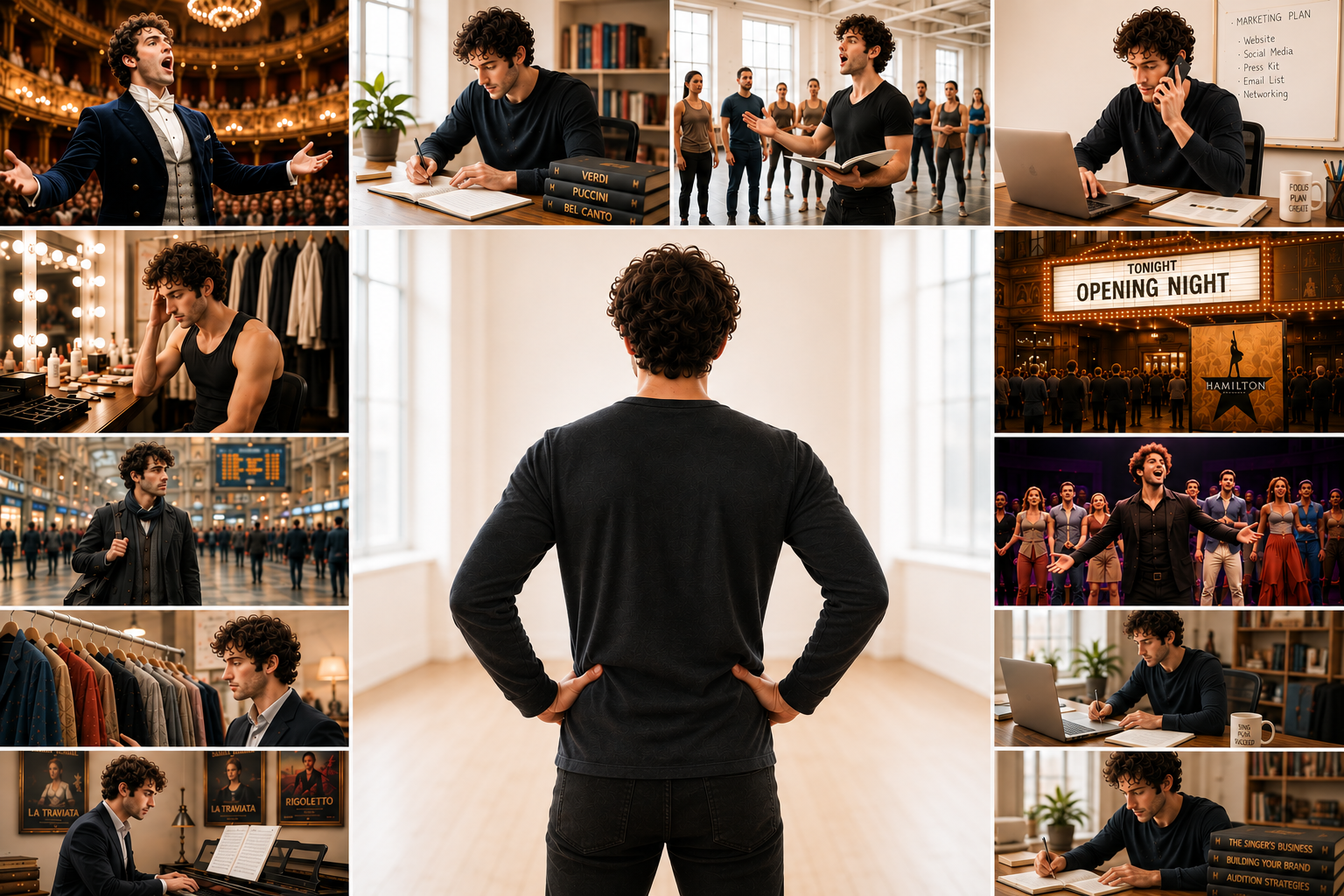
PART 1
So You Want to sing professionally for a Living?
Read This Before You Bet Everything on It
If you’ve decided you want to sing for a living you’re choosing a unique craft—and a demanding one. Though professional singing is highly specialized and requires a unique skill set, it can provide a healthy living.
Most singers don’t struggle because they lack passion. They struggle because nobody gave them a current, realistic picture of how the career works: what it costs, what it pays, and what it requires over time.
This post is not here to discourage you. It’s here to replace vague hope with a plan.
Why Singing?
People don’t choose a singing career because it seems “easy” or “safe.” They often choose it because they have to, they are compelled to choose it.
Maybe you can’t imagine doing anything else. Maybe you love the stage. Maybe music changed your life and you want to pay that forward. Maybe you believe so deeply in music and that they are a positive force in our world, that you need to dedicate your life to it. Maybe singing in stage productions feels like the ultimate synthesis of musical skill—voice, language, acting, storytelling, movement, and design.
Good. Hold onto that.
Now let’s talk about what tends to happen right after the inspiration.
The thoughts most singers have (but rarely admit)
If you’re in school, recently graduated, or trying to plan your next steps, you may have caught yourself thinking:
- If I love it enough, I’ll find a way to make a living doing it.
- Once they hear me, I’ll be booked a couple years out.
- I’m one of a kind.
- I’ll win a major competition and become an overnight success.
- There’s lots of work in Europe—I’ll just move there and launch a career.
- If I go to a top school, I’ll be hired right away.
- I’ll teach privately while I audition constantly.
- An agent will pick me up immediately and gigs will follow quickly.
- I’ll live with family or multiple roommates to save money.
- I’ll get a church job that covers my cost of living and they’ll understand when I leave for gigs.
- I’ll just teach adjunct at college near me to support myself, and leave as I need to for gigs or auditions.
Some of these can be part of a workable strategy. The problem is when they become the strategy.
The money question and the fine print
Let’s get specific, because ambiguity is expensive.
What can I expect to earn?
Based on my personal experience and what I’ve observed among colleagues, freelance singers earn anywhere from $20,000–$80,000 per year (gross), with some years higher and some lower, and a smaller number reaching or exceeding six figures. That’s a huge range…and it’s typically higher for opera than musical theater. Some of you may be thinking “that’s fantastic, where do I sign,” but wait just a minute.
Though that range isn’t typical of A-listers or crossover careers, it does cover the majority of singers out there, again with some exceptions on the upper end of the earnings scale. What if you’re not on the upper end of the scale though, but closer to that $40,000-$50,000? Can you live on that?
If you’re earning closer to the 80, 90 thousand range, be prepared for the following:
- constantly on the road, living out of a suitcase
- limited control over your schedule
- Preparation for the next job while doing the current one, no breaks
- long stretches away from home (think months not weeks)
Also keep in mind that the salary range above is the number before expenses and taxes.

Even if you’re “living out of a suitcase,” you still have life costs—and you’ll also have significant career costs.
Common expenses include:
- self-employment taxes (plus an accountant or tax software)
- rent, utilities, internet, phone
- food
- travel costs
- audition costs (attire, scores, accompanist fees, recordings, etc.)
- lessons and coaching
- scores and books
- Subscription fees
- Technology purchases and repairs
- health insurance
- childcare (if applicable)
- management fees (when you have management)
- union dues (AGMA or other)
- retirement savings
- Dance equipment, supplies, and training

If reading that list makes you briefly consider an MBA, video game design, or selling your childhood Pokémon collection “while the market is hot,” that’s normal.
While we’re delivering the cold hard truth, take a look at some of the other financial aspects to consider, as outlined in this sobering but honest article by Mark Rinaldi about the hidden costs involved in an Opera career specifically. For Musical Theater singers, here are some stats from Playbill.com
Don’t quit just yet.
The modern model: multiple paths, no one “correct way”
A lot of singers are sold a single storyline: Go to school → get discovered → get an agent → work steadily forever. Here’s what the old model used to look like:
That happens sometimes, but I’d not the norm. Building your plan around rare outcomes is a good way to get hurt financially.
More often, the modern pathway to a career includes:
- structured training (degrees, artists diplomas, apprenticeships)
- strategic gigging (small roles, covers, concerts, church work, outreach)
- continuous skill-building (languages, acting, musicianship)
- financial planning (budgeting, flexible work, controlled debt)
- long-term relationships (real professional community)
One big factor has an outsized impact on whether this is sustainable, student debt.
Musicians rarely have an income curve that makes massive loans easy to repay. Be realistic about what it means to carry $100,000–$200,000 or more in debt while also paying for auditions, coaching, travel, and health care.
If you can, my advice is simple: get paid to go to school. I know, easier said than done, and it may mean not picking your “dream school,” if that dream also comes with the nightmare of thousands of dollars of debt.
That doesn’t mean “prestige doesn’t matter.” Rather, it means, that a top tier school with immediate brand name recognition may get you in the room, but you still have to get the gig. That part is done exclusively with good training, no matter how big, small or prestigious the school is.
If all that doesn’t scare you away and “gasp” maybe even makes you want to learn more about how to make this happen, click here to continue reading part 2 of this post!